| Absorption and Distribution |
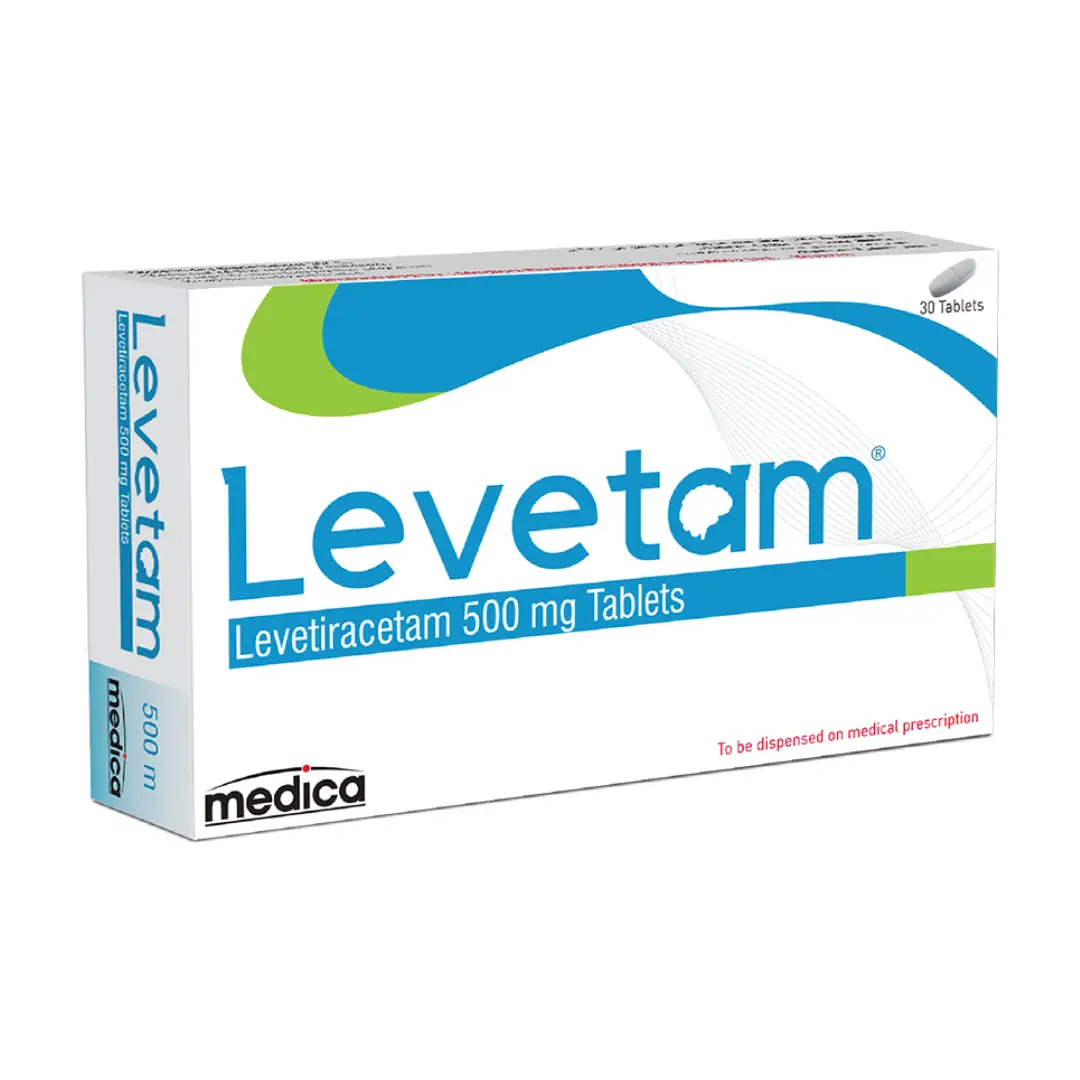
Absorption of Levetiracetam is rapid, with peak plasma concentrations occurring in about an hour following oral administration in fasted subjects. The oral bioavailability of Levetiracetam tablets is 100% and the tablets and oral solution are bioequivalent in rate and extent of absorption. Food does not affect the extent of absorption of Levetiracetam but it decreases Cmax by 20% and delays T max by 1.5 hours. The pharmacokinetics of Levetiracetam are linear over the dose range of 500 to 5000 mg. Steady state is achieved after 2 days of multiple twice-daily dosing. Due to its complete and linear absorption, plasma levels can be predicted from the oral dose of levetiracetam expressed as mg/kg bodyweight. Therefore there is no need for plasma level monitoring of levetiracetam. Metabolism: Levetiracetam is not extensively metabolized in humans. The major metabolic pathway is the enzymatic hydrolysis of the acetamide group, which produces the carboxylic acid metabolite, ucb L057 (24% of dose) and is not dependent on any liver cytochrome P450 isoenzymes. Therefore the interaction of Levetiracetam with other substances, or vice versa, is unlikely. Elimination: Levetiracetam plasma half-life in adults is 7 ± 1 hour and is unaffected by either dose or repeated administration. The major route of excretion is via urine, accounting for a mean 95% of the dose, with approximately 93% of the dose excreted within 48 hours. The total body clearance is 0.96 ml/min/kg and the renal clearance is 0.6 ml/min/kg. The mechanism of excretion is glomerular filtration with subsequent partial tubular reabsorption. The metabolite ucb L057 is excreted by glomerular filtration and active tubular secretion with a renal clearance of 4 ml/min/kg.
|
| Dosage and Administration |
Important Administration Instructions: Levetiracetam tablet is given orally with or without food. The Levetiracetam dosing regimen depends on the indication, age group, dosage form (tablets or oral solution), and renal function. Dosing for Partial-Onset Seizures: The recommended dosing for monotherapy and adjunctive therapy is the same as following: Adults 16 Years of Age and Older: Initiate treatment with a daily dose of 1000 mg/day, given as twice-daily dosing (500 mg twice daily). Additional dosing increments may be given (1000 mg/day additional every 2 weeks) to a maximum recommended daily dose of 3000 mg. Pediatric Patients: – 1 Month to < 6 Months Initiate treatment with a daily dose of 14 mg/kg in 2 divided doses (7 mg/kg twice daily). Increase the daily dose every 2 weeks by increments of 14 mg/kg to the recommended daily dose of 42 mg/kg (21 mg/kg twice daily). In the clinical trial, the mean daily dose was 35 mg/kg in this age group. – 6 Months to < 4 Years Initiate treatment with a daily dose of 20 mg/kg in 2 divided doses (10 mg/kg twice daily). Increase the daily dose in 2 weeks by an increment of 20 mg/kg to the recommended daily dose of 50 mg/kg (25 mg/kg twice daily). If a patient cannot tolerate a daily dose of 50 mg/kg, the daily dose may be reduced. In the clinical trial, the mean daily dose was 47 mg/kg. – 4 Years to < 16 Years Initiate treatment with a daily dose of 20 mg/kg in 2 divided doses (10 mg/kg twice daily). Increase the daily dose every 2 weeks by increments of 20 mg/kg to the recommended daily dose of 60 mg/kg (30 mg/kg twice daily). For Levetiracetam tablets dosing in pediatric patients weighing 20 to 40 kg, initiate treatment with a daily dose of 500 mg given as twice daily dosing (250 mg twice daily). Increase the daily dose every 2 weeks by increments of 500 mg to a maximum recommended daily dose of 1500 mg (750 mg twice daily). For Levetiracetam tablets dosing in pediatric patients weighing more than 40 kg, initiate treatment with a daily dose of 1000 mg/day given as twice daily dosing (500 mg twice daily). Increase the daily dose every 2 weeks by increments of 1000 mg/day to a maximum recommended daily dose of 3000 mg (1500 mg twice daily). Dosing for Myoclonic Seizures in Patients 12 Years of Age and Older With Juvenile Myoclonic Epilepsy: Initiate treatment with a dose of 1000 mg/day, given as twice-daily dosing (500 mg twice daily). Increase the dosage by 1000 mg/day every 2 weeks to the recommended daily dose of 3000 mg. The effectiveness of doses more than 3000 mg/day has not been studied. Dosing for Primary Generalized Tonic-Clonic Seizures: – Adults 16 Years of Age and Older Initiate treatment with a daily dose of 1000 mg/day, given as twice-daily dosing (500 mg twice daily). Increase dosage by 1000 mg/day every 2 weeks to the recommended daily dose of 3000 mg. The effectiveness of doses more than 3000 mg/day has not been adequately studied. – Pediatric Patients 6 to <16 Years of Age: Initiate treatment with a daily dose of 20 mg/kg in 2 divided doses (10 mg/kg twice daily). Increase the daily dose every 2 weeks by increments of 20 mg/kg to the recommended daily dose of 60 mg/kg (30 mg/kg twice daily). Contraindications: Levetiracetam tablets are contraindicated in patients with a hypersensitivity to Levetiracetam. Reactions have included anaphylaxis and angioedema.
|
| Warnings and Precautions |
Behavioral Abnormalities and Psychotic Symptoms Levetiracetam tablets may cause behavioral abnormalities and psychotic symptoms, so treated patients with Levetiracetam should be monitored for psychiatric signs and symptoms. Suicidal Behavior and Ideation: Antiepileptic drugs (AEDs), including Levetiracetam, increase the risk of suicidal thoughts or behavior in patients taking these drugs for any indication. Patients treated with any AED for any indication should be monitored for the emergence or worsening of depression, suicidal thoughts or behavior, and/or any unusual changes in mood or behavior. Somnolence and Fatigue: Levetiracetam may cause somnolence and fatigue. Patients should be monitored for these signs and symptoms and advised not to drive or operate machinery until they have gained sufficient experience on Levetiracetam to gauge whether it adversely affects their ability to drive or operate machinery. Asthenia: In controlled clinical studies in adult patients with epilepsy, 15% of patients taking levetiracetam developed asthenia, compared with 9% of patients taking placebo. Anaphylaxis and Angioedema: Levetiracetam can cause anaphylaxis or angioedema after the first dose or at any time during treatment. Serious Dermatological Reactions: Serious dermatological reactions, including Stevens-Johnson syndrome (SJS) and toxic epidermal necrolysis (TEN), have been reported in some pediatric and adult patients treated with Levetiracetam. Coordination Difficulties: Levetiracetam may cause coordination difficulties. Withdrawal Seizures: As with most antiepileptic drugs, Levetiracetam tablets should generally be withdrawn gradually because of the risk of increased seizure frequency and status epilepticus. Hematologic Abnormalities: Levetiracetam can cause hematologic abnormalities. Increase in Blood Pressure: In a randomized, placebo-controlled study in patients 1 month to <4 years of age, a significantly higher risk of increased diastolic blood pressure was observed in the Levetiracetam tablets-treated patients (17%). Side Effects: Like all medicines, this medicine can cause side effects, although not everybody gets them. Asthenia, somnolence, headache, infection, dizziness, pain, pharyngitis, depression, nervousness, rhinitis, anorexia, ataxia, vertigo, amnesia, anxiety, cough, diplopia, emotional lability, hostility, paresthesia, sinusitis Drug Interactions: Pre-marketing data from clinical studies conducted in adults indicate that levetiracetam did not influence the serum concentrations of existing antiepileptic medicinal products (phenytoin, carbamazepine, valproic acid, phenobarbital, lamotrigine, gabapentin and primidone) and that these antiepileptic medicinal products did not influence the pharmacokinetics of levetiracetam. As in adults, there is no evidence of clinically significant medicinal product interactions in paediatric patients receiving up to 60 mg/kg/day levetiracetam. Methotrexate: Concomitant administration of levetiracetam and methotrexate has been reported to decrease methotrexate clearance, resulting in increased/prolonged blood methotrexate concentration to potentially toxic levels. Blood methotrexate and levetiracetam levels should be carefully monitored in patients treated concomitantly with the two drugs. Oral contraceptives: Levetiracetam 1000 mg daily did not influence the pharmacokinetics of oral contraceptives.
|

Reviews
There are no reviews yet.