| Pharmacodynamics |
Azithromycin is a macrolide antibiotic that exerts its antibacterial effects by inhibiting protein synthesis in susceptible bacteria.
Spectrum of Activity:
o Azithromycin has broad-spectrum activity against gram-positive, gram-negative, and atypical bacteria:
• Gram-positive bacteria: Streptococcus pneumoniae, Streptococcus pyogenes, Staphylococcus aureus (excluding MRSA).
• Gram-negative bacteria: Haemophilus influenzae, Moraxella catarrhalis, Neisseria gonorrhoeae.
• Atypical pathogens: Chlamydia trachomatis, Mycoplasma pneumoniae, Legionella pneumophila.
• Other: Mycobacterium avium complex (MAC) in immunocompromised patients.
|
| Pharmacokinetics |
Absorption:
After oral administration, bioavailability of azithromycin is approximately 37%. Peak plasma levels are achieved 2 to 3 hours after taking azithromycin by oral route. Administration of azithromycin capsules following a substantial meal reduces bioavailability by at least 37%. While azithromycin DT is not affected by food.
Distribution:
Orally administered azithromycin is widely distributed throughout the body. In pharmacokinetic studies it has been demonstrated that the concentrations of azithromycin measured in tissues are noticeably higher (as much as 50 times) than those measured in plasma, which indicates that the agent strongly binds to tissues.
Metabolism:
Azithromycin undergoes limited metabolism, with 10 inactive metabolites formed mainly through N- and O-demethylation, hydroxylation, and cleavage of sugar conjugates. These metabolic changes occur primarily in the bile, where high concentrations of the unchanged drug are also found.
Excretion:
The terminal plasma elimination half-life closely reflects the elimination half-life from tissues of 2-4 days.
|
| Indications and usage |
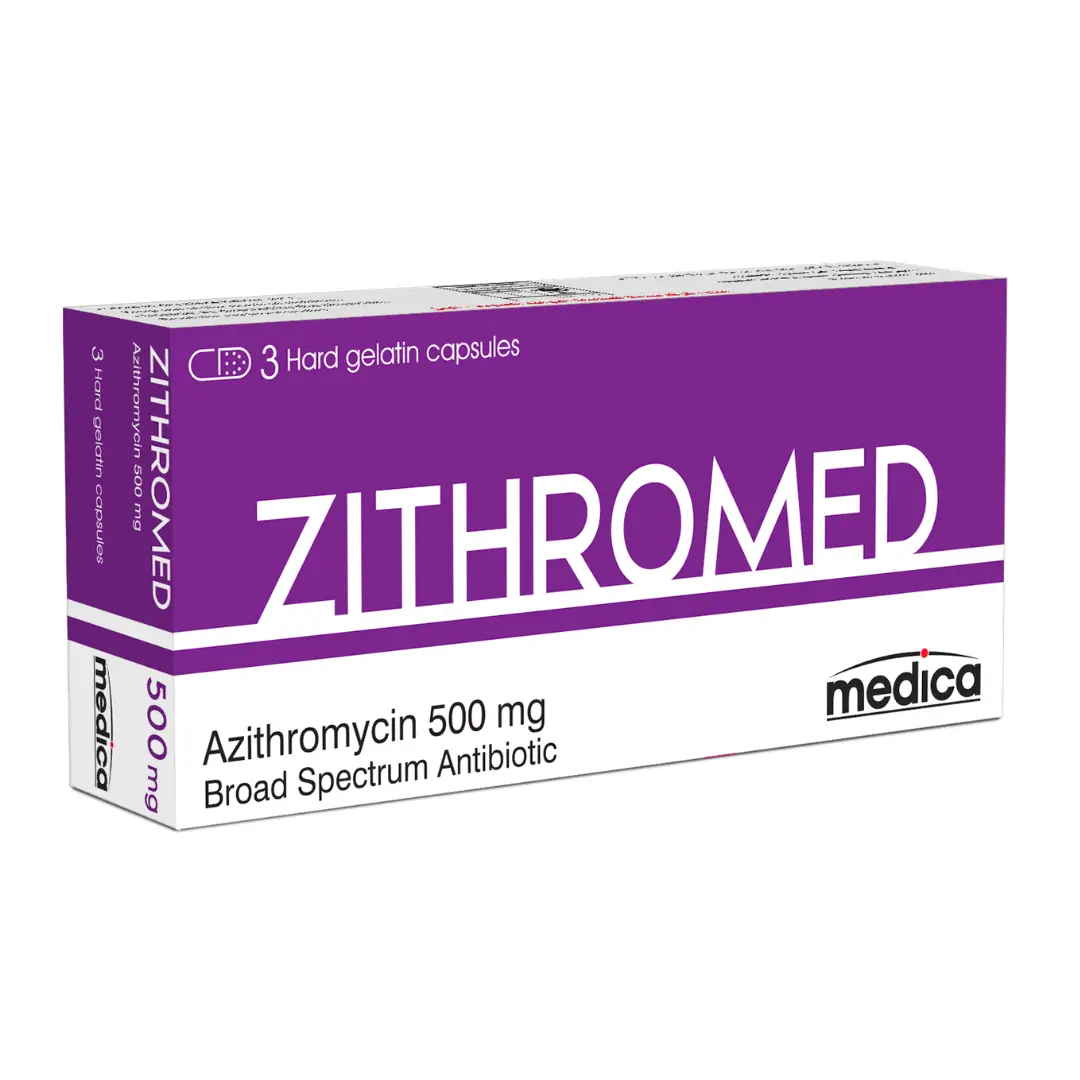
Zithromed is indicated for the treatment of the following infections when known or likely to be due to one or more susceptible microorganisms. (See spectrum of activity).
Adult Patients:
• Acute bacterial exacerbations of chronic bronchitis.
• Acute bacterial sinusitis.
• Community-acquired pneumonia.
• Pharyngitis/tonsillitis.
• Uncomplicated skin and skin structure infections.
• Urethritis and cervicitis.
• Typhoid fever.
Pediatric Patients:
• Acute otitis media (≥ 6 months of age).
• Community-acquired pneumonia (≥ 6 months of age).
• Pharyngitis/tonsillitis (≥ 2 years of age).
|
| Dosage and Administration |
Adult doses for Zithromed Capsules:
Community-acquired pneumonia 500 mg once daily 3 days
Acute bacterial sinusitis 500 mg once daily 3 days
Skin and soft tissue infection 500 mg once daily 3 days
Streptococcal pharyngitis/tonsillitis (alternative to penicillin) 500 mg once daily 3 days
Special Instructions for Use:
Capsules: Take on empty stomach at least 1 hour before or 2 hours after meals, as food can reduce absorption. Swallow whole do not crush or open the capsules.
Uncomplicated chlamydia infection 1g as a single dose Single dose
Gonorrhea (alternative therapy) 2 g as a single dose Single dose
Mycobacterium Avium Complex, prophylaxis (HIV Patients) 1200 mg once weekly Continuous
|
| Contraindications |
• Patients with known hypersensitivity to azithromycin.
• Patients with a history of cholestatic jaundice/hepatic dysfunction associated with prior use of azithromycin.
|
| Warnings and Precautions |
Hypersensitivity: Serious allergic reactions including angioneurotic oedema and anaphylaxis (rarely fatal).
• Hepatotoxicity: Discontinue azithromycin immediately if signs and symptoms of hepatitis occur.
• Prolongation of QT interval: Prolonged cardiac repolarization and QT interval, imparting a risk of developing cardiac arrhythmia and torsades de pointes, have been seen in treatment with other macrolides.
• Myasthenia gravis: Azithromycin exacerbates muscle weakness in persons with myasthenia gravis.
|
| Adverse Reactions |
Organ system Adverse effects
Gastrointestinal Nausea, vomiting, diarrhea, abdominal pain, dyspepsia, flatulence.
Cardiovascular QT prolongation, arrhythmia, palpitations.
Hepatic Elevated liver enzymes, hepatotoxicity, cholestatic jaundice.
Hematologic Leukopenia, neutropenia, thrombocytopenia (rare).
Dermatologic Rash, pruritus, Stevens-Johnson syndrome (rare) toxic epidermal necrolysis(rare).
Neurologic Headache, dizziness, somnolence.
Psychiatric Anxiety, agitation, insomnia(rare).
Musculoskeletal Myalgia, arthralgia(rare) .
|
| Drug Interactions |
Antacids (Containing Aluminum or Magnesium) Reduce azithromycin absorption. Administer azithromycin at least 1 hour before or 2 hours after antacids.
Warfarin & Other Oral Anticoagulants May enhance anticoagulant effect, increasing bleeding risk. Monitor INR and signs of bleeding.
Digoxin Increased digoxin levels due to gut microbiome alteration. Monitor digoxin levels for toxicity (nausea, arrhythmias).
Cyclosporine Increased cyclosporine levels due to reduced metabolism. Monitor cyclosporine levels and renal function.
Statins (e.g., Atorvastatin, Simvastatin) Increased risk of rhabdomyolysis due to impaired statin metabolism. Consider temporary statin discontinuation if needed.
QT-Prolonging Drugs (e.g., Amiodarone, Fluoroquinolones, Antipsychotics, SSRIs) Additive QT prolongation, increasing risk of Torsades de Pointes. Avoid co-administration or monitor ECG in high-risk patients.
Ergot Alkaloids (e.g., Ergotamine, Dihydroergotamine) Increased risk of ergot toxicity (vasospasm, ischemia). Contraindicated due to potential severe vasoconstriction.
Theophylline Potential increase in theophylline levels. Monitor theophylline levels to prevent toxicity.
HIV Protease Inhibitors (e.g., Ritonavir, Indinavir) May alter azithromycin levels. Monitor for increased or decreased efficacy.
Oral Hypoglycemics (e.g., Sulfonylureas) Potential for enhanced hypoglycemic effect. Monitor blood glucose levels closely.
|
| Use in Specific Population |
Patients with renal impairment:
No dose adjustment is necessary in patients with mild to moderate renal impairment (GFR 10-80 ml/min). Caution should be exercised when azithromycin is administered to patients with severe renal impairment (GFR < 10 ml/min).
Patients with hepatic impairment:
Since azithromycin is metabolized in the liver and excreted in the bile, the drug should not be given to patients suffering from severe liver disease.
Pregnancy:
Pregnancy Category B. Available data from published literature and post marketing experience over several decades with azithromycin use in pregnant women have not identified any drug associated risks for major birth defects, miscarriage, or adverse maternal or fetal outcomes.
Lactation:
Azithromycin is present in human milk no serious adverse reactions have been reported in breastfed infants after maternal administration of azithromycin.
Pediatric Usage:
Safety and effectiveness of azithromycin has not been established in infants below 6 months old. Zithromed DT & Suspension can be administered in children above 6 months of age.
|


Reviews
There are no reviews yet.