| Composition |
Each Film Coated Tablet contains: Rosuvastatin Calcium equivalent to Rosuvastatin Drug Class: Statins
|
| Pharmacodynamics |
Inhibition of HMG-CoA reductase by rosuvastatin accelerates the expression of LDL receptors, followed by the uptake of LDL-C from blood to the liver, leading to a decrease in plasma LDL-C and total cholesterol. The maximum LDL-C reduction of rosuvastatin is usually achieved within 4 weeks and is maintained thereafter.
|
| Pharmacokinetics |
Absorption: Peak plasma concentrations of rosuvastatin were reached 3 to 5 hours following oral dosing, Both C max and AUC increased in approximate proportion to rosuvastatin tablets dose. The absolute bioavailability of rosuvastatin is approximately 20%. The AUC of rosuvastatin does not differ following evening or morning drug administration. Distribution: Mean volume of distribution at steady-state of rosuvastatin is approximately 134 liters. Rosuvastatin is 88% bound to plasma proteins, primarily albumin. Metabolism: Rosuvastatin is not extensively metabolized; approximately 10% of a radiolabeled dose is recovered as metabolite. The major metabolite is N-desmethyl rosuvastatin, which is formed principally by cytochrome P450 2C9, and in vitro studies have demonstrated that N-desmethyl rosuvastatin has approximately one-sixth to one-half the HMG-CoA reductase inhibitory activity of the parent compound. Overall, greater than 90% of active plasma HMG-CoA reductase inhibitory activity is accounted for by the parent compound. Excretion: Following oral administration, rosuvastatin and its metabolites are primarily excreted in the feces (90%). The elimination half-life of rosuvastatin is approximately 19 hours.
|
| Indications and Usage |
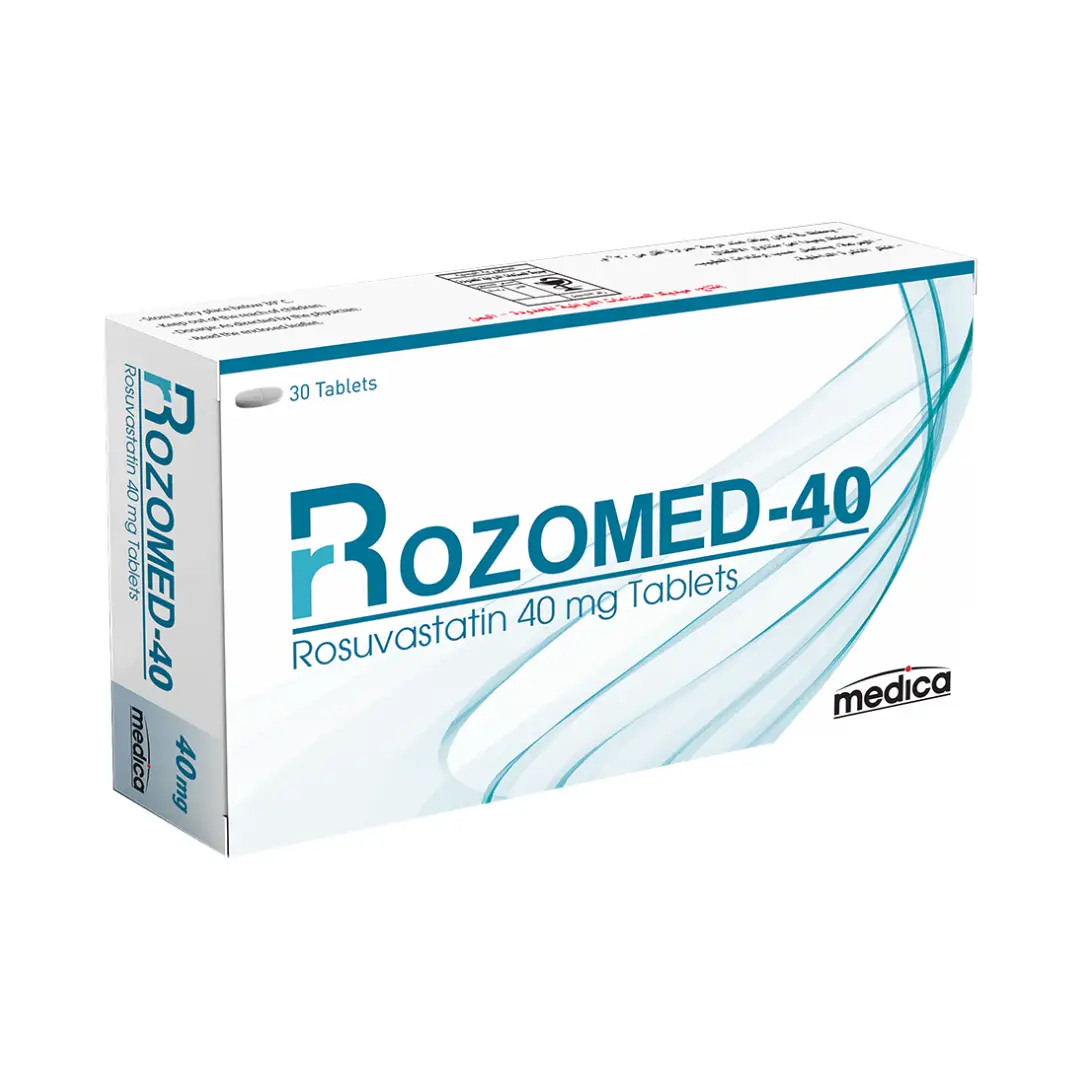
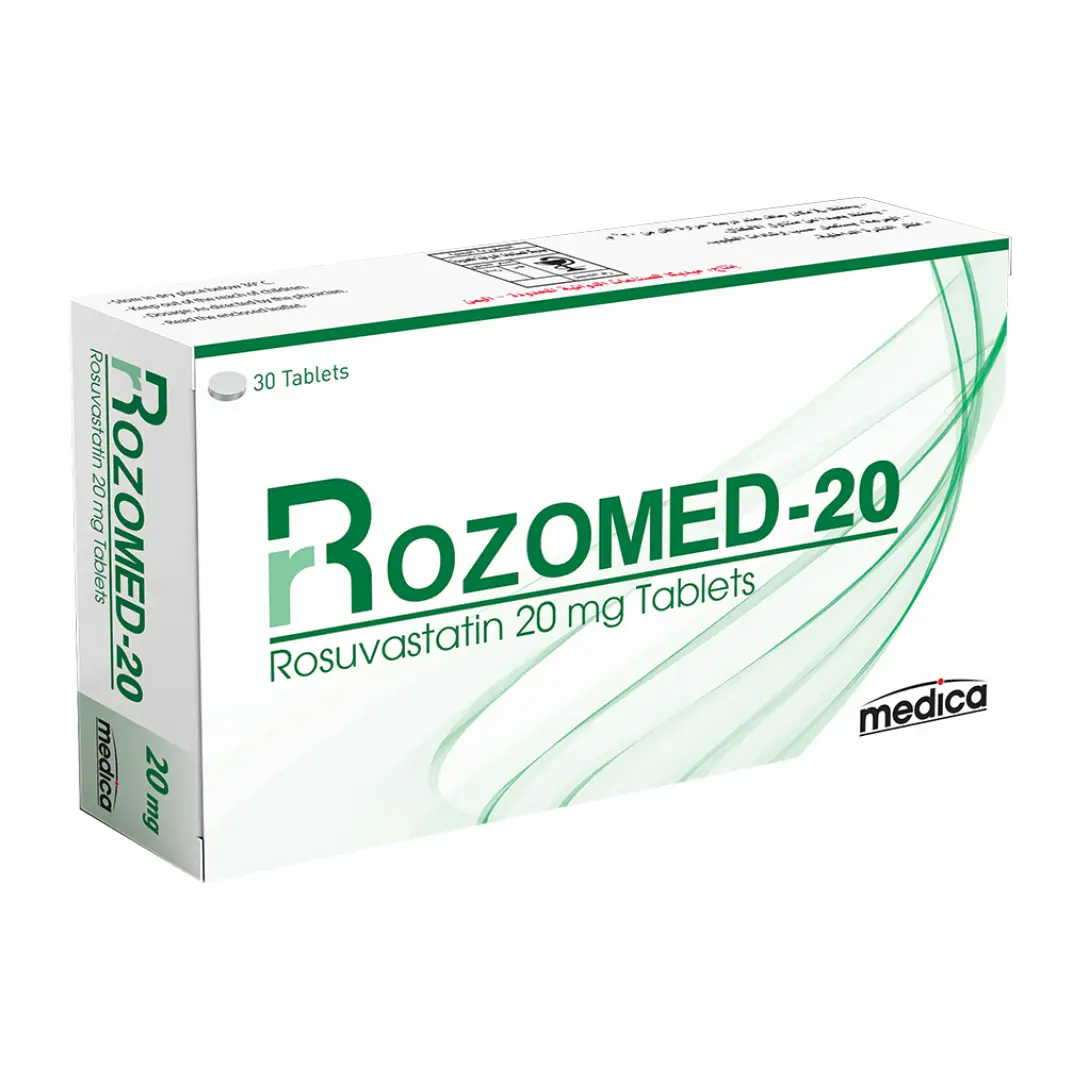
Rozomed tablets are indicated: • To reduce the risk of major adverse cardiovascular (CV) events: (CV death, nonfatal myocardial infarction, nonfatal stroke, or an arterial revascularization procedure) in adults without established coronary heart disease, who are at increased risk of CV disease based on age, high-sensitivity C-reactive protein (hs-CRP) ≥ 2 mg/L, and at least one additional CV risk factor. • As an adjunct to diet to: Reduce Low-density lipoprotein cholesterol (LDL-C) in adults with primary hyperlipidemia. Reduce LDL-C and slow the progression of atherosclerosis in adults. Reduce LDL-C in adults and pediatric patients aged 8 years and older with heterozygous familial hypercholesterolemia (HeFH). • As an adjunct to other LDL-C–lowering therapies, or alone if such treatments are unavailable, to reduce LDL-C in adults and pediatric patients aged 7 years and older with homozygous familial hypercholesterolemia (HoFH). • As an adjunct to diet for the treatment of adults with: Primary dysbetalipoproteinemia.
|
| Dosage and Administration |
General Dosage and Administration Information: Administer Rozomed tablets orally as a single dose at any time of day, with or without food. Tablets should be swallowed whole. Assess LDL-C levels when clinically appropriate, as early as 4 weeks after initiating Rozomed tablets, and adjust the dosage if necessary. If a dose is missed, advise patients not to take an extra dose. Resume treatment with the next dose. When taking Rozomed tablets with an aluminum and magnesium hydroxide combination antacid, administer rosuvastatin tablets at least 2 hours before the antacid.
|
| Recommended Dosage in Adult Patients |
The recommended dose of Rozomed tablets depends on a patient’s indication for usage, LDL-C levels, and individual risk for CV events. The dosage range is 5 to 40 mg, taken orally once daily.
|
| Recommended Dosage in Pediatric Patients |
• Dosage in pediatric patients 8 years of age and older with HeFH: The recommended dosage range is 5 mg to 10 mg orally once daily in patients aged 8 years to less than 10 years, and 5 mg to 20 mg orally once daily in patients aged 10 years and older. • Dosage in pediatric patients 7 years of age and older with HoFH: The recommended dosage is 20 mg orally once daily.
|
| Contraindications |
Acute liver failure or decompensated cirrhosis. Hypersensitivity to rosuvastatin or to any of the excipients.
|
| Warnings and Precautions |
Myopathy and Rhabdomyolysis: Rosuvastatin tablets may cause myopathy (manifested as muscle pain, tenderness, or weakness associated with elevated creatine kinase (CK)) and rhabdomyolysis. Acute kidney injury secondary to myoglobinuria and rare fatalities have occurred as a result of rhabdomyolysis with statins. Hepatic Dysfunction: Increases in serum transaminases have been reported with use of rosuvastatin tablets. In most cases, these changes appeared soon after initiation, were transient, were not accompanied by symptoms, and resolved or improved on continued therapy or after a brief interruption in therapy. Patients who consume substantial quantities of alcohol and/or have a history of liver disease may be at increased risk for hepatic injury. Proteinuria and Hematuria: Dipstick-positive proteinuria and microscopic hematuria were observed among rosuvastatin tablets treated patients. These findings were more frequent in patients taking rosuvastatin tablets 40 mg, when compared to lower doses of rosuvastatin tablets or comparator statins, though it was generally transient and was not associated with worsening renal function. Although the clinical significance of this finding is unknown, consider a dose reduction for patients on rosuvastatin tablets therapy with unexplained persistent proteinuria and/or hematuria during routine urinalysis testing. Increases in HbA1c and Fasting Serum Glucose Levels Increase in blood glucose and glycosylated hemoglobin (HbA1c) levels reported with statin intake; in some instances, these increases may exceed the threshold for the diagnosis of diabetes mellitus.
|
| Use in Special Populations |
Patients with renal impairment: Rosuvastatin exposure is not influenced by mild to moderate renal impairment (CL ≥ 30 mL/min/1.73 m²). Exposure to rosuvastatin is increased to a clinically significant extent in patients with severe renal impairment. The recommended starting dosage is 5 mg daily and should not exceed 10 mg daily. Patients with hepatic impairment: Rosuvastatin is contraindicated in patients with acute liver failure or decompensated cirrhosis. Chronic alcohol liver disease is known to increase rosuvastatin exposure. Pregnancy: Rosuvastatin is contraindicated in pregnancy. Lactation: Breastfeeding is not recommended during treatment with rosuvastatin tablets. Pediatric Use: The safety and efficacy of rosuvastatin tablets have not been established in pediatric patients younger than 8 years of age with heterozygous familial hypercholesterolemia (HeFH), younger than 7 years of age with homozygous familial hypercholesterolemia (HoFH), or in pediatric patients with other types of hyperlipidemias (other than HeFH or HoFH).
|
| Side Effects / Adverse Reactions |
Like all medicines, this medicine can cause side effects, although not everybody gets them. It is important that you are aware of what these side effects may be. They are usually mild and disappear after a short time. Common possible side effects (these may affect between 1 in 10 and 1 in 100 patients): Headache, stomach pain, constipation, nausea, muscle pain, weakness, dizziness. An increase in the amount of protein in the urine — this usually returns to normal on its own without having to stop taking rosuvastatin tablets (only rosuvastatin 40 mg). Diabetes; this is more likely if you have high levels of sugars and fats in your blood, are overweight and have high blood pressure. Uncommon possible side effects (these may affect between 1 in 100 and 1 in 1,000 patients): Rash, itching or other skin reactions. An increase in the amount of protein in the urine — this usually returns to normal on its own without having to stop taking rosuvastatin tablets (only rosuvastatin 5 mg, 10 mg and 20 mg). Rare possible side effects (these may affect between 1 in 1,000 and 1 in 10,000 patients): Severe allergic reaction — signs include swelling of the face, lips, tongue, and/or throat, difficulty in swallowing and breathing, a severe itching of the skin (with raised lumps). Very rare possible side effects (these may affect less than 1 in 10,000 patients): Jaundice (yellowing of the skin and eyes), hepatitis (an inflamed liver), traces of blood in your urine, damage to the nerves of your legs and arms (which may be felt as numbness), joint pain, memory loss and breast enlargement in men (gynecomastia).
|
| Side effects unknown frequency may include |
Diarrhea, Stevens–Johnson syndrome (serious blistering condition of the skin, eyes and genitals), cough, shortness of breath, oedema (swelling), sleep disturbances including nightmares, sexual difficulties, depression, breathing problems, including persistent cough and/or shortness of breath or fever, tendon injury and muscle weakness that is constant.
|
| Drug Interactions |
Cyclosporine: Concomitant use increases rosuvastatin exposure. Limit the rosuvastatin dose to 5 mg once daily when used with cyclosporine, and to 10 mg once daily when used with the other drugs. Protease inhibitor antiviral agents (e.g., atazanavir/ritonavir, lopinavir/ritonavir, or simeprevir): Combination increases rosuvastatin exposure. Coumarin anticoagulants: Combination prolongs INR. Ensure INR is stable before starting rosuvastatin calcium and monitor INR frequently until stable upon initiation or withdrawal of rosuvastatin therapy. Concomitant lipid-lowering therapies: Use with fibrates or lipid-modifying doses (>1 g/day) of niacin increases the risk of adverse skeletal muscle effects.
|

Reviews
There are no reviews yet.