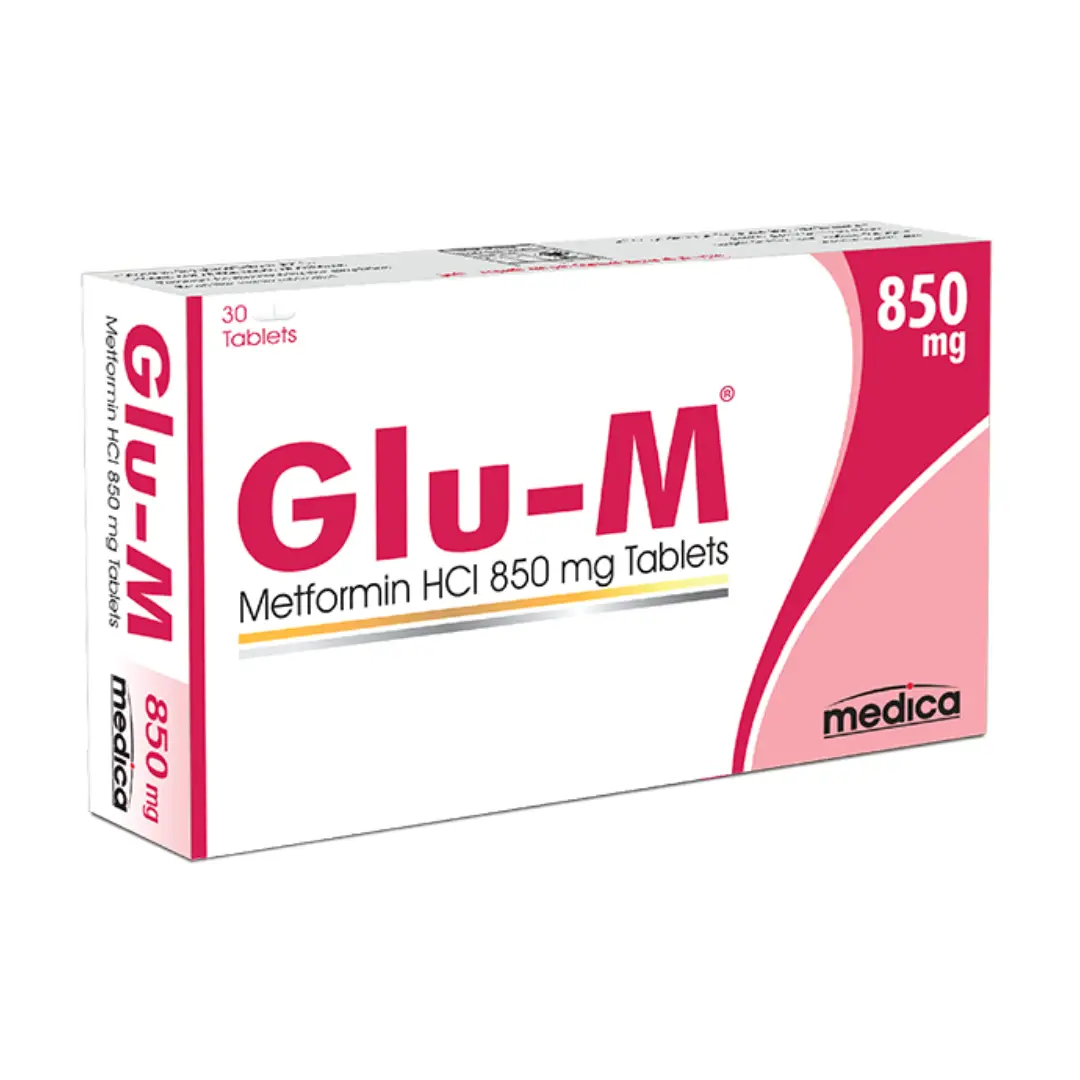
| Composition |
Metromin Hydrochloride 500 mg
|
| Drug Class |
Biguanides, Antidiabetic
|
| Absorption |
Following a single oral dose of metformin film coated tablet, maximum concentration is reached in approximately 2.5hours (t max). Absolute bioavailability of a 500 mg or 850 mg metformin hydrochloride tablet is approximately 50-60% in healthy subjects.
|
| Distribution |
Plasma protein binding is negligible. The mean volume of distribution ranged between 63 – 276L.
|
| Metabolism |
Metaformin is excreted unchanged in the urine and does not undergo hepatic metabolism.
|
| Excretion |
Following oral administration, approximately 90% of the absorbed drug is eliminated via the renal route within the first 24 hours, with a plasma elimination half-life of approximately 6.5 hours.
|
| Before You Start Glu-M Tablets |
Tell your doctor if you: – Have type 1 diabetes. – Have a history or risk for diabetic ketoacidosis. – Have kidney problems. – Have liver problems. – Have heart problems, including congestive heart failure. – Are older than 80 years. – Are pregnant or plan to become pregnant. – Are breast-feeding.
|
| Administration and Dosage |
Swallow tablet whole with sufficient amount of water. The recommended starting dose of Glu-M is 500mg orally every 12 hours or 850 mg once daily with or after meals. Increase the dose in increments of 500mg weekly on the bases of glycemic control and tolerability, up to a maximum dose.
|
| Contraindictions |
– Hypersensitive to Metformin or any components within the formulation. – Diabetic ketoacidosis with or without coma. – Severe renal disease eGFR<30mL/min/1.73 m². – Disease which may cause tissue hypoxia (especially acute disease, or worsening of chronic disease) such as: decompensated heart failure, respiratory failure, recent myocardial infarction, shock.
|
| Warnings and Precautions |
Lactic Acidosis: Metformin can cause a rare but serious side effect called lactic acidosis. Symptoms include muscle pain, weakness, slow breathing and confusion, that can cause death. Lactic acidosis is a medical emergency and must be treated in a hospital. Hypoglycemia with Concomitant Use with Insulin and Insulin Secretagogues: Concomitant administration of insulin and insulin secretagogues (e.g. sulfonylurea) may increase risk of hypoglycemia; a lower dose of insulin secretagogue may require to avoid risk of hypoglycemia. Cardiac function: Patients with heart failure are more at risk of hypoxia and renal insufficiency. In patients with stable chronic heart failure, metformin may be used with a regular monitoring of cardiac and renal function. For patients with acute and unstable heart failure, metformin is contraindicated.
|
| Use in Special Populations |
Patients with renal impairment: Metformin is substantially excreted by the kidney, and the risk of accumulation and lactic acidosis increases with the degree of renal impairment. Metformin is contra indicated in severe renal impairment, patients with an estimated glomerular filtration rate (eGFR) below 30ml/min/1.73m². Patients with hepatic impairment: Metformin film coated tablets are not recommendedin patients with hepatic impairment. Use of metformin in patients with hepatic impairment has been associated with some cases of lactic acidosis. Pregnancy: Metformin is classified as Pregnancy Category B. Animal studies have not demonstrated a risk to the fetus, and there are no adequate and well-controlled studies in pregnant women; however it may be used during pregnancy when clearly needed. Lactation: Studies in lactating rats show that metformin is excreted into milk and reaches level comparable to those in plasma. Because the protential for hypoglycemia in nursing infants may exist, a decision should be made whether to discontinue nursing or to discontinue the drug taking into account the importance of the drug to the mother. Pediatric Use: The diagnosis of type 2 diabetes mellitus should be confirmed before initiating treatment with metformin in pediatric patients 10 years of age and older.
|
| Side Effects/Adverse Reactions |
Common side effects: During treatment initiation, the most common adverse reactions are nausea, vomiting, diarrhea, abdominal pain, and loss of appetite which resolve spontaneously in most cases. To prevent them, it is recommended to take metformin in 2 or 3 daily doses and to slowly increase the doses. Less common side effects: Metabolism and nutrition disorders: – Vitamin B12 deficiency. – Lactic acidosis (Very rare). – Taste disturbance.
|
| Drug Interactions |
Drugs that increase risk of lactic acidosis: Topiramate, acetazolamide, or dichlorphenamide. Concomitant use of these drugs with metformin may increase the risk of lactic acidosis. Drugs that reduce metformin clearance: e.g. ranolazine, vandetanib, dolutegravir, and cimetidine, drugs that interfere with renal elimination could increase systemic exposure to metformin and may increase the risk for lactic acidosis. Alcohol: Potentiate the effect of metformin on lactate metabolism. This may increase risk to lactic acidosis. Drugs that increase risk of hyperglycemia: May lead to loss of glycemic control e.g. thiazides and other diuretics, corticosteroids, phenothiazines, thyroid products, estrogens, oral contraceptives, phenytoin, nicotinic acid, calcium channel blockers, and isoniazid. Overdose: Overdose of metformin has occured, including ingestion of amounts greater than 50g. Hypoglycemia was reported in approximately 10% of cases, but no association with metformin has been established. Lactic acidosis has been reported in approximately 32% of metformin over dose cases. Metformin is dialyzable with a clearance of up to 170mL/min under good hemodynamic conditions.
|
| Storage Conditions |
Store in a dry place below 30°C.
|
| Pack Size |
2 blisters (Alu/PVC). Each blister contains 15 tablets.
|


Reviews
There are no reviews yet.