| Composition |
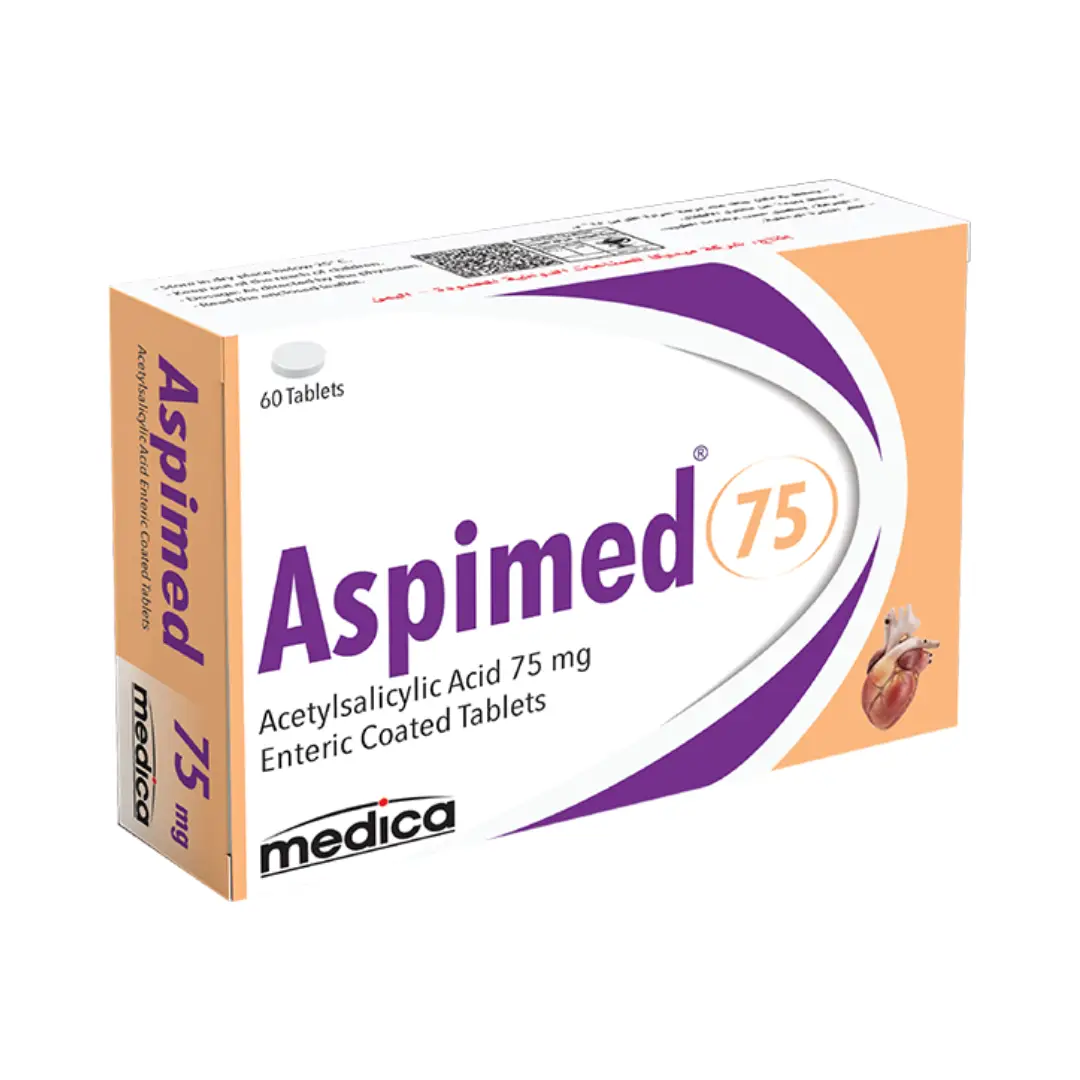
Each Enteric Coated Tablet contains Acetylsalicylic Acid 25 mg and 100 mg Drug Class: Non-steroidal anti-inflammatory drug, Antiplatelet
|
| Pharmacokinetics |
Absorption: When acetylsalicylic acid is ingested orally, it is rapidly absorbed in both the stomach and the proximal small intestine. The rate of absorption depends on the dosage form, the presence or absence of food, and gastric pH. Enteric-coated acetylsalicylic acid products are erratically absorbed from the GI tract. Distribution: Acetylsalicylic Acid is widely distributed throughout the body and crosses the placenta. Metabolism: Salicylate is mainly metabolized in the liver. A small portion is converted to gentilic acid and other hydroxybenzoic acids. Excretion: Excretion of salicylates occurs mainly through the kidney. The half-life of salicylate ranges between 3.5 and 4.5 hours.
|
| Before You Start Aspimed Tablets |
Tell your doctor if you: – Are allergic to acetylsalicylic acid or other NSAIDs. – Have a history of stomach ulcers, bleeding disorders, or asthma. – Have kidney or liver disease. – Are pregnant or breastfeeding. – Are taking anticoagulants, corticosteroids, or other NSAIDs.
|
| Indications and Usage |
– Prevention of heart attack or stroke in patients at high cardiovascular risk. – Secondary prevention following myocardial infarction, stroke, or in patients with stable or unstable angina.
|
| Administration and Dosage |
Adults: – Secondary prevention of myocardial infarction: The recommended dose is 75-100 mg once daily. – Prevention of cardiovascular morbidity in patients with stable angina pectoris or a history of unstable angina: The recommended dose is 75-100 mg once daily. – Post-acute phase of myocardial infarction or after coronary interventions: The recommended dose is 75-100 mg once daily. – Prevention of transient ischemic attacks (TIA) and ischemic stroke: The recommended dose is 75-100 mg once daily. – Initial treatment of acute myocardial infarction (loading dose): A single dose of 150-300 mg, administered as soon as possible after symptom onset. Administration Guide: – Aspimed enteric-coated tablets should be swallowed whole with water; do not chew or crush them. – It is recommended to take the tablet with food or after meals to reduce gastrointestinal discomfort. Contraindications: – Known hypersensitivity to acetylsalicylic acid. – Hemorrhagic disorders. – Children or teenagers with viral infections (risk of Reye's syndrome). – Severe liver or kidney impairment. Pregnancy: At low doses (less than 100 mg/day), acetylsalicylic acid can be safely used in pregnant women under proper medical supervision and monitoring. However, its use at therapeutic or high doses is contraindicated, especially during the third trimester. Lactation: Acetylsalicylic Acid is excreted in breast milk in small amounts, so it should not be taken by breastfeeding women, as there is a risk of Reye's syndrome in the infant. Paediatric usage: Acetylsalicylic Acid should not be used in children and adolescents under 10 years of age, except when specifically indicated under medical supervision.
|
| Side Effects/Adverse Reactions |
Gastrointestinal: Common: Dyspepsia, nausea, vomiting, heartburn. Uncommon: Gastritis, abdominal pain. Rare but serious: Gastrointestinal bleeding, peptic ulcer, gastric perforation. Hematologic: Uncommon: Easy bruising, prolonged bleeding time. Rare: Thrombocytopenia, anemia (due to occult bleeding). Respiratory (in predisposed individuals): Rare: Bronchospasm, asthma exacerbation, dyspnea. Skin and Allergic Reactions: Rare: Urticaria, rash, angioedema, anaphylaxis. Auditory and Neurological: Rare (especially with overdose): Tinnitus, dizziness, hearing loss, confusion. Renal: Rare: Renal impairment, interstitial nephritis (usually with prolonged high-dose use). Hepatic: Very rare: Hepatotoxicity, elevated liver enzymes. Central Nervous System (CNS): Rare (especially in overdose): Headache, agitation, lethargy, seizures. Others: Very rare but serious: Reye's syndrome (in children or adolescents with viral infections).
|
| Drug Interactions |
Increased risk of bleeding: Concurrent use with anticoagulants, antiplatelet agents, some antidepressants (SSRIs and SNRIs), NSAIDs, or corticosteroids may increase the risk of bleeding. Ibuprofen and other NSAIDs: May compete for COX binding and reduce the cardioprotective effect of acetylsalicylic acid. Alcohol: Chronic use enhances irritation and increases bleeding risk. Methotrexate: Low-dose acetylsalicylic acid decreases renal clearance of methotrexate, leading to an increased risk of toxicity. Uricosuric Agents (e.g., Probenecid, Sulfinpyrazone): Acetylsalicylic Acid antagonizes their effect, reducing their efficacy in gout management. Antihypertensives (especially ACE inhibitors, ARBs, diuretics): NSAID-like effects of acetylsalicylic acid may reduce their efficacy, increasing the risk of renal impairment. Valproic Acid: Acetylsalicylic Acid displaces valproate from plasma proteins, which may result in potential toxicity due to increased free valproate levels. Carbonic Anhydrase Inhibitors (e.g., Acetazolamide): Enhanced risk of metabolic acidosis and CNS toxicity due to salicylate accumulation. Digoxin: High doses of acetylsalicylic acid may reduce the renal clearance of digoxin, leading to increased digoxin levels. Antacids: Patients using gastro-resistant acetylsalicylic acid should be advised against ingesting antacids simultaneously, to avoid premature drug release, increased urine alkalinization, and reduced drug effect.
|
| Overdose |
Early symptoms include CNS stimulation, vomiting, hyperpnea, hyperactivity, and possible convulsions. This can progress to depression, coma, respiratory failure, and collapse. Treatment includes administration of activated charcoal or gastric lavage, and sodium bicarbonate. Haemodialysis may be necessary in severe cases. Seek immediate medical attention, even if asymptomatic.
|
| Warnings and Precautions |
Use caution in patients with asthma, renal impairment, or bleeding risk. Long-term use may increase the risk of gastrointestinal bleeding, even with enteric coating. Do not by yourself interrupt the period of treatment prescribed for you. Not recommended during the last trimester of pregnancy. Monitor for signs of bleeding, especially with concurrent anticoagulants. KEEP OUT OF THE REACH OF CHILDREN. Active hepatic disease or hepatic impairment increases the risk of hepatic injury. Acetylsalicylic Acid may cause sodium and water retention in patients with renal impairment. Acetylsalicylic Acid should be avoided in patients with hepatic impairment.
|

Reviews
There are no reviews yet.