| Composition |
Each Film Coated Tablet contains:
Moxifloxacin Hydrochloride equivalent to
Moxifloxacin 400 mg.
DRUG CLASS: Fluoroquinolone, Antibiotic.
|
| Pharmacokinetics |
Absorption:
Moxifloxacin when given as an oral tablet, is well absorbed from the gastrointestinal tract. The absolute bioavailability of moxifloxacin is approximately 90%.
Distribution:
Moxifloxacin is approximately 30-50% bound to serum proteins, regardless of drug concentration. The volume of distribution of moxifloxacin ranges from 1.7 to 2.7 L/kg. Moxifloxacin is widely distributed throughout the body, with tissue concentrations often exceeding plasma concentrations. Moxifloxacin has been detected in the saliva, nasal and bronchial secretions, mucosa of the sinuses, skin blister fluid, subcutaneous tissue, skeletal muscle, and abdominal tissues and fluids following oral or intravenous administration of 400 mg.
Metabolism:
Approximately 52% of an oral or intravenous dose of moxifloxacin. is metabolized via glucuronide and sulfate conjugation. The sulfate conjugate (M1) accounts for approximately 38% of the dose, and is eliminated primarily in the feces. Approximately 14% of an oral or intravenous dose is converted to a glucuronide conjugate (M2), which is excreted exclusively in the urine. Peak plasma concentrations of M2 are approximately 40% those of the parent drug, while plasma concentrations of M1 are generally less than 10% those of moxifloxacin.
Excretion:
Approximately 45% of an oral or intravenous dose of moxifloxacin is excreted as unchanged drug (~20% in urine and ~25% in feces). A total of 96% ± 4% of an oral dose is excreted as either unchanged drug or known metabolites.
|
| Before You Start Floxitab Tablets |
Tell your doctor if you:
• Have tendon problems.
• Have a disease that causes muscle weakness.
• Have central nervous system problems (such as epilepsy or seizures).
• Have or anyone in your family have an irregular heartbeat (such as bradycardia).
• Have low blood potassium (hypokalemia).
• Have rheumatoid arthritis (RA) or history of joint problems.
• Are pregnant or plan to become pregnant.
• Are breastfeeding.
• Have diabetes or problems with low blood sugar.
|
| Indications and Usage |
Floxitab is indicated in adult patients for the treatment of:
Community Acquired Pneumonia:
Floxitab is indicated for the treatment of Community Acquired Pneumonia caused by susceptible isolates of Streptococcus pneumoniae (including multi-drug-resistant Streptococcus pneumoniae [MDRSP]), Haemophilus influenzae, Moraxella catarrhalis, methicillin-susceptible Staphylococcus aureus, Klebsiella pneumoniae, Mycoplasma pneumoniae, or Chlamydophila pneumoniae.
Uncomplicated Skin and Skin Structure Infections:
Floxitab is indicated for the treatment of uncomplicated skin and skin structure infections caused by susceptible isolates of methicillin-susceptible Staphylococcus aureus or Streptococcus pyogenes.
Complicated Skin and Skin Structure Infections:
Floxitab is indicated for the treatment of complicated skin and skin structure infections caused by susceptible isolates of methicillin-susceptible Staphylococcus aureus, Escherichia coli, Klebsiella pneumoniae, or Enterobacter cloacae.
Complicated Intra-Abdominal Infections:
Floxitab is indicated for the treatment of complicated intra-abdominal infections, including polymicrobial infections such as abscess, caused by susceptible isolates of Escherichia coli, Bacteroides fragilis, Streptococcus anginosus, Streptococcus constellates, Enterococcus faecalis, Proteus mirabilis, Clostridium perfringens, Bacteroides thetaiotaomicron, or Peptostreptococcus species.
Plague:
Floxitab is indicated for the treatment of plague, including pneumonic and septicemic plague, due to susceptible isolates of Yersinia pestis and prophylaxis of plague in adult patients.
Acute Bacterial Sinusitis:
Floxitab is indicated for the treatment of acute bacterial sinusitis (ABS) caused by susceptible isolates of Streptococcus pneumoniae, Haemophilus influenzae, or Moraxella catarrhalis.
Acute Bacterial Exacerbation of Chronic Bronchitis:
Floxitab is indicated for the treatment of acute bacterial exacerbation of chronic bronchitis (ABECB), caused by susceptible isolates of Streptococcus pneumoniae, Haemophilus influenzae, Haemophilus parainfluenza, Klebsiella pneumoniae, methicillin-susceptible Staphylococcus aureus, or Moraxella catarrhalis.
|
| Administration and Dosage |
Type of infection: Community Acquired Pneumonia
Dose every 24 hours: 400 mg
Duration: 7–14 days
Type of infection: Uncomplicated Skin and Skin Structure Infections (SSSI)
Dose every 24 hours: 400 mg
Duration: 7 days
Type of infection: Complicated SSSI
Dose every 24 hours: 400 mg
Duration: 7–21 days
Type of infection: Complicated Intra-Abdominal Infections
Dose every 24 hours: 400 mg
Duration: 5–14 days
Type of infection: Plague
Dose every 24 hours: 400 mg
Duration: 10–14 days
Type of infection: Acute Bacterial Sinusitis
Dose every 24 hours: 400 mg
Duration: 10 days
Type of infection: Acute Bacterial Exacerbation of Chronic Bronchitis
Dose every 24 hours: 400 mg
Duration: 5 days
|
| Administration Guide |
Administer Floxitab at least 4 hours before or 8 hours after products containing magnesium, aluminum, iron or zinc, including antacids, sucralfate, multivitamins.
With Food:
Floxitab can be taken with or without food, drink fluids liberally when taking the drug.
Missed Doses:
If a dose is missed, it should be taken anytime but not later than 8 hours prior to the next scheduled dose. If less than 8 hours remain before the next dose, the missed dose should not be taken and continue treatment with the next scheduled dose at the usual time. Do not take two doses together to make up for the missed dose.
Contraindications:
Moxifloxacin is contraindicated in persons with a history of hypersensitivity to moxifloxacin or other members of quinolone class of antibacterial agents.
|
| Warnings and Precautions |
Tendinitis and Tendon Rupture:
Fluoroquinolones, including moxifloxacin, have been associated with an increased risk of tendinitis and tendon rupture. The risk of fluoroquinolone-associated tendinitis and tendon rupture increases with age and in patients receiving corticosteroid therapy.
Central Nervous System Effects:
Fluoroquinolones, including moxifloxacin, have been associated with an increased risk of central nervous system reactions.
Exacerbation of Myasthenia Gravis:
Fluoroquinolones, including moxifloxacin, have neuromuscular blocking activity and may exacerbate muscle weakness in patients with myasthenia gravis.
QT Prolongation:
Moxifloxacin has been shown to prolong the QT interval of the electrocardiogram in some patients.
Hypersensitivity Reactions:
Serious anaphylactic reactions, some following the first dose, have been reported in patients receiving fluoroquinolone therapy.
Blood Glucose Disturbances:
As with all fluoroquinolones, disturbances in blood glucose, including both hypoglycemia and hyperglycemia, have been reported with moxifloxacin.
Photosensitivity/Phototoxicity:
Exposure to sunlight or ultraviolet (UV) rays during treatment with this medication may lead to undesirable skin reactions. It is advised to avoid direct exposure during the treatment period.
|
| Use in Special Populations |
Patients with renal impairment:
No dosage adjustment is necessary in patients with renal impairment, including those patients' requiring hemodialysis.
Patients with hepatic impairment:
No dosage adjustment is recommended for mild, moderate, or severe hepatic insufficiency.
Pregnancy:
Pregnancy Category C. Because no adequate or well-controlled studies have been conducted in pregnant women, moxifloxacin should be used during pregnancy only if the potential benefit justifies the potential risk to the fetus.
Lactation:
Moxifloxacin may also be excreted in human milk. Because of the potential for serious adverse reactions in infants who are nursing from mothers taking moxifloxacin a decision should be made whether to discontinue nursing or to discontinue the drug, taking into account the importance of the drug to the mother.
Pediatric Use:
Effectiveness in pediatric patients and adolescents less than 18 years of age has not been established.
Geriatric Use:
Geriatric patients are at increased risk for developing severe tendon disorders, including tendon rupture when being treated with a fluoroquinolone.
|
| Side Effects/Adverse Reactions |
Central Nervous System:
Common: Headache, dizziness, insomnia.
Less common: Anxiety, confusion, tremors, hallucinations, agitation.
Rare: Seizures, increased intracranial pressure.
Cardiovascular System:
Common: Palpitations, tachycardia, chest pain.
Less common: QT interval prolongation, arrhythmias, hypotension.
Gastrointestinal System:
Common: Nausea, vomiting, diarrhea, abdominal pain.
Less common: Dry mouth, flatulence, dyspepsia, gastritis.
Rare: Clostridium difficile-associated diarrhea (potentially severe).
Hematologic System:
Less common: Anemia, leukopenia, thrombocytopenia.
Peripheral Nervous System:
Less common: Paresthesia (tingling), numbness, weakness.
Rare: Peripheral neuropathy (potentially irreversible).
Skin and Hypersensitivity Reactions:
Common: Rash, itching.
Less common: Photosensitivity.
Rare: Stevens-Johnson syndrome, anaphylactic reactions.
|
| Drug Interactions |
Antacids (e.g., aluminum, magnesium, iron-containing products):
May reduce the bioavailability of moxifloxacin.
Corticosteroids: Increased risk of tendinitis or tendon rupture.
NSAIDs (e.g., ibuprofen, naproxen):
NSAIDs increased risk of CNS stimulation and seizures.
Warfarin:
Potential enhanced anticoagulant effect. Monitor INR closely.
Antidiabetic agents (e.g., sulfonylureas, insulin):
Disturbances of blood glucose levels (hypo- or hyperglycemia). Monitor blood glucose concentrations closely.
Drugs that prolong QT interval (e.g., amiodarone, sotalol, tricyclic antidepressants and domperidone):
Increased risk of arrhythmias. Therefore, moxifloxacin should be avoided with Class IA and Class III antiarrhythmics.
Methotrexate:
Moxifloxacin may increase risk of methotrexate-associated toxic reactions. Concomitant use is not recommended.
Phenytoin:
Potential altered serum levels, monitor phenytoin levels when initiating or discontinuing moxifloxacin.
Overdose:
Single oral overdoses up to 2.8 g were not associated with any serious adverse events. In the case of acute overdose, empty the stomach and maintain adequate hydration. Monitor ECG due to the possibility of QT interval prolongation. Carefully observe the patient and give supportive treatment.
|
| Storage Conditions |
Store in a dry place below 30°C.
|
| Pack Size |
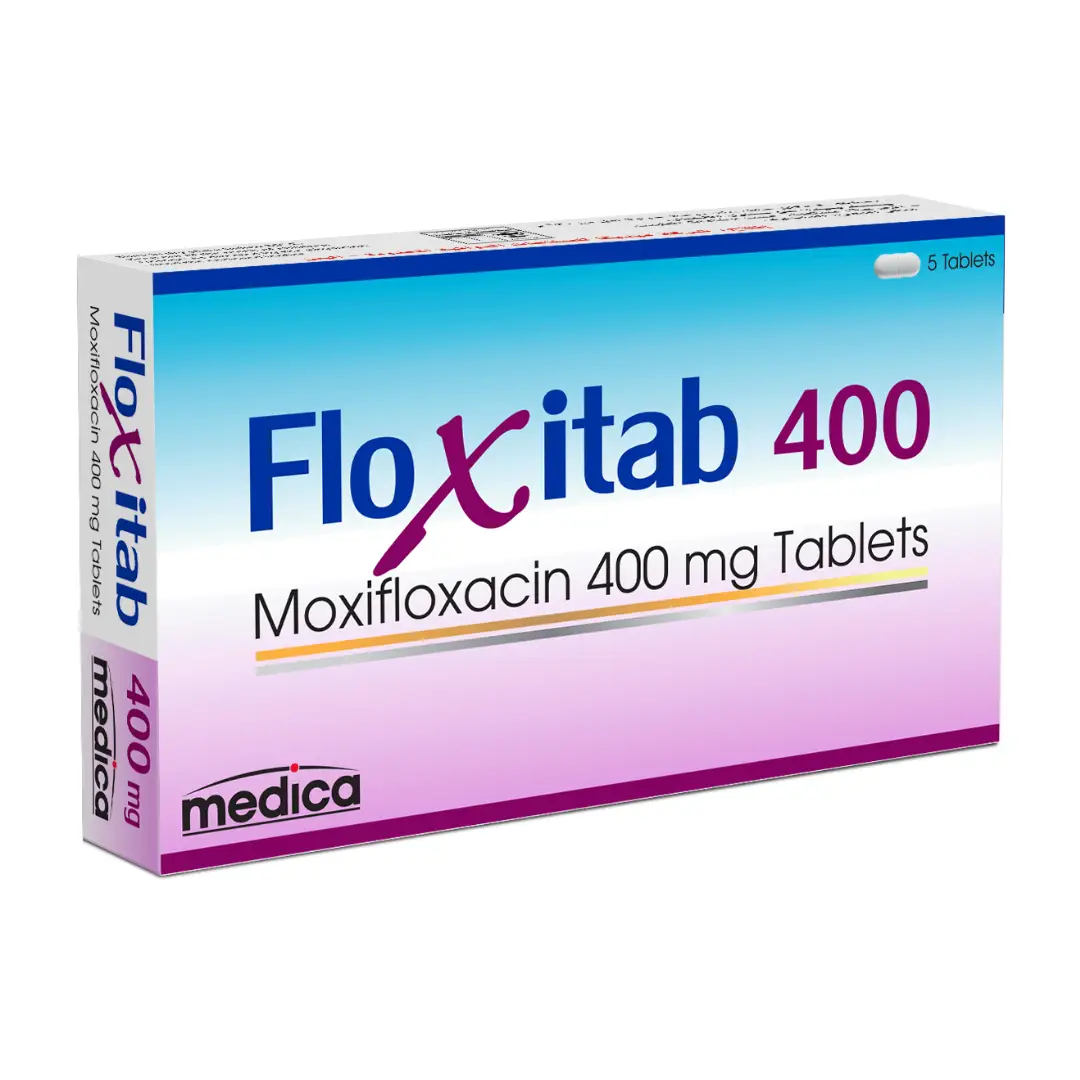
1 blister (Alu/PVC) contains 5 tablets…..Alu/Alu
|

Reviews
There are no reviews yet.