| Pharmacodynamics |
Olanzapine exhibits high-affinity antagonist binding to serotonin 5-HT2A and 5-HT6 receptors, dopamine D1–D4 receptors, histamine H1 receptors, and adrenergic α1 receptors. It shows moderate antagonist affinity for serotonin 5-HT3 and muscarinic M1–M5 receptors. Olanzapine has low affinity for GABA, benzodiazepine (BZD), and β-adrenergic receptors.
|
| Pharmacokinetics |
Absorption: Peak plasma concentrations are reached approximately 6 hours after an oral dose. Distribution: Olanzapine is extensively distributed throughout the body, with an apparent volume of distribution of approximately 1000 L. It is about 93% bound to plasma proteins, mainly albumin and α₁-acid glycoprotein, across a wide concentration range (7–1100 ng/mL). Metabolism: Olanzapine is extensively metabolized in the liver, mainly through direct glucuronidation and CYP-mediated oxidation. Only about 7% of a radiolabeled dose is excreted unchanged in the urine, indicating high metabolic conversion. The main circulating metabolites, 10-N-glucuronide and 4'-N-desmethyl olanzapine, are pharmacologically inactive. Excretion: Following oral administration, approximately 57% of the olanzapine dose is excreted in the urine and 30% in the feces. Only a small fraction (7%) is eliminated unchanged in urine, confirming extensive metabolism prior to elimination. Olanzapine exhibits a half-life ranging from 21 to 54 hours, with a mean of 30 hours.
|
| Before You Start Olanzamed DT Tablets |
Tell your doctor if you have: • Heart problems. • Seizures. • Diabetes or high blood sugar levels (hyperglycemia). • High cholesterol or triglyceride levels in your blood. • Liver problems. • Low or high blood pressure. • Alzheimer’s disease. • Enlarged prostate in men. • Are pregnant or plan to become pregnant. • Are breastfeeding.
|
| Indications |
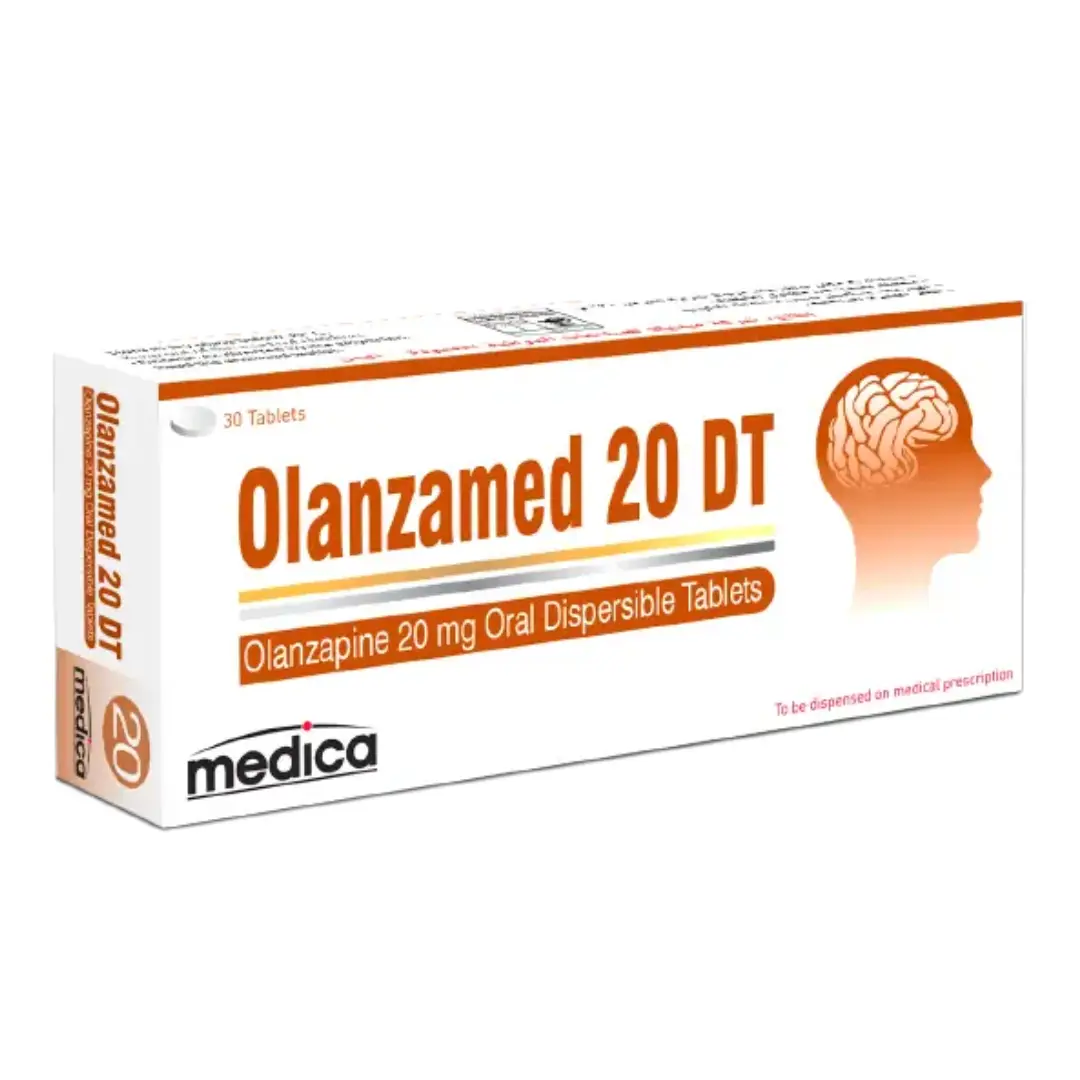
• Schizophrenia: Olanzamed DT is indicated for the acute and maintenance treatment of schizophrenia and related psychotic disorders. • Bipolar I Disorder: Olanzamed DT is indicated for the acute treatment of manic or mixed episodes in bipolar I disorder. Administration and Dosage: 1. Schizophrenia: Adults: The initial dose of Olanzamed DT in adults generally begins at 5 to 10 mg/day, with a target dose of 10 mg/day within several days. Further dosage adjustments, if necessary, should generally occur at intervals no shorter than 1 week. Maintenance dose: Typically 10 to 20 mg/day. Adolescents (13 – 17yrs): Initial dose typically 2.5 to 5 mg/day, targeting 10 mg/day. 2. Bipolar I Disorder (Manic or Mixed Episodes): Adults: Initial dose generally 10 to 15 mg/day, with a target dose of 10 mg/day within several days. Maintenance Monotherapy: 5 to 20 mg/day for ongoing treatment. Adolescents (13 – 17 yrs): Initial dose typically 2.5 to 5 mg/day, with a target dose of 10 mg/day. Administration Guide: Olanzamed DT is intended for oral use only and dissolves rapidly in the mouth. Handle the tablets carefully with dry hands, avoiding direct contact whenever possible. To use, peel back the blister packaging to remove one tablet and place it directly in the mouth. Alternatively, the tablet can be stirred into 125 mL of water, milk, coffee, orange juice, or apple juice and consumed immediately. Before You Start Olanzamed DT Tablets: Tell your doctor if you have: • Heart problems. • Seizures. • Diabetes or high blood sugar levels (hyperglycemia). • High cholesterol or triglyceride levels in your blood. • Liver problems. • Low or high blood pressure. • Alzheimer’s disease. • Enlarged prostate in men. • Are pregnant or plan to become pregnant. • Are breastfeeding.
|
| Warnings and Precautions: |
Drug Reaction with Eosinophilia and Systemic Symptoms (DRESS): DRESS has been reported with olanzapine exposure. It may present with a cutaneous reaction (such as rash or exfoliative dermatitis), eosinophilia, fever, and/or lymphadenopathy, along with systemic complications such as hepatitis, nephritis, pneumonitis, myocarditis, and/or pericarditis. DRESS is sometimes fatal. Discontinue olanzapine if DRESS is suspected. Neuroleptic Malignant Syndrome (NMS): A potentially fatal symptom complex sometimes referred to as Neuroleptic Malignant Syndrome (NMS) has been reported in association with administration of antipsychotic drugs, including olanzapine.
|
| Contraindications |
Hypersensitivity to olanzapine or any component of the tablet. Metabolic Changes: Atypical antipsychotic drugs may cause metabolic changes, including hyperglycaemia, dyslipidaemia, and weight gain, which may increase cardiovascular and cerebrovascular risks. Hyperglycaemia and Diabetes Mellitus: Patients should undergo fasting blood glucose testing at baseline and periodically. Watch for symptoms of hyperglycaemia including polydipsia, polyuria, polyphagia, and weakness. Dyslipidaemia: Alterations in lipid profiles have been observed. Monitor lipid levels at baseline and periodically. Tardive Dyskinesia: A syndrome of potentially irreversible, involuntary movements may develop. Use the lowest effective dose and monitor regularly. Leukopenia, Neutropenia, and Agranulocytosis: Discontinue therapy at the first sign of blood dyscrasias or if the absolute neutrophil count drops below 1,000/mm³. Seizures: Seizures have been reported in patients treated with olanzapine. Use with caution in individuals with a history of seizures or conditions that may lower the seizure threshold. Potential for Cognitive and Motor Impairment: Somnolence occurred in 26% of olanzapine-treated patients. Use caution when operating machinery. Hyperprolactinemia: As with other D2 antagonists, olanzapine may elevate prolactin levels; elevation may persist during chronic use. Dysphagia: Esophageal dysmotility and aspiration have been associated with antipsychotic use. Orthostatic Hypotension: Caution patients about the risk, particularly during dose titration or when combined with another hypotensive agent.
|
| Use in Special Populations |
Patients with Renal Impairment: Because olanzapine is highly metabolized before excretion and only 7% of the drug is excreted unchanged, renal dysfunction alone is unlikely to have a major impact on the pharmacokinetics of olanzapine. Therefore, dose adjustment is not required. Patients with Hepatic Impairment: Presence of hepatic impairment may be expected to reduce the clearance of olanzapine. Pregnancy: Pregnancy category C. Animal studies have shown that high doses of olanzapine may cause fetal harm, including delayed birth and increased fetal loss. There are no adequate and well-controlled studies in pregnant women. Olanzapine should only be used during pregnancy if the potential benefit justifies the potential risk to the fetus. Lactation: Olanzapine is present in human milk. It is recommended that women receiving olanzapine do not breast-feed. Pediatric Use: The safety and effectiveness of oral olanzapine in the treatment of schizophrenia and manic or mixed episodes associated with bipolar I disorder have been established in short-term studies in adolescents (ages 13 to 17 years). The recommended starting dose for adolescents is lower than that for adults. Geriatric Use: The elimination half-life of olanzapine is longer in elderly patients compared to younger adults. Therefore, caution is advised when dosing elderly individuals, especially if other factors may affect drug metabolism or sensitivity. Effect On Ability to Drive or Use Machines: Olanzapine may cause drowsiness; caution should be taken when driving and using machines.
|
| Side Effects / Adverse Reactions |
Very Common: Drowsiness, weight gain, increased appetite, dry mouth. Common: Dizziness or light-headedness, constipation, swelling (e.g., hands or feet), increased blood sugar or cholesterol, blurred vision, fatigue, restlessness, tremors, muscle stiffness. Uncommon: Difficulty speaking or swallowing, involuntary movements (e.g., lip-smacking, tongue or facial movements), rapid or irregular heartbeat, difficulty urinating, liver enzyme elevation.
|
| Drug Interactions |
Drugs that inhibit CYP1A2 enzyme: may decrease the clearance of olanzapine (e.g., fluvoxamine). Drug that induces CYP1A2 enzyme may increase the clearance of olanzapine (e.g., Carbamazepine, rifampicin) Charcoal the administration of activated charcoal (1 g) reduced the C max and AUC of oral olanzapine by about 60%. Diazepam and Alcohol: The co-administration with olanzapine potentiated the orthostatic hypotension observed with olanzapine. Antihypertensive Agents: Use caution as olanzapine may enhance the hypotensive effects. Levodopa and Dopamine Agonists: Olanzapine may antagonize the effects of these agent.
|
| Overdosage |
Olanzapine overdose up to 300 mg usually causes drowsiness and slurred speech, with common symptoms like agitation, rapid heartbeat, and decreased consciousness. Serious effects can include aspiration, cardiac arrest, arrhythmias, seizures, and respiratory depression. There is no specific antidote; management includes immediate ECG monitoring, gastric lavage (if unconscious, after intubation), activated charcoal within 6 hours, and supportive care focusing on airway, oxygenation, and treating hypotension while avoiding beta-agonist drugs.
|
| Storage Conditions |
Store in a dry place below 30 °C.
|

Reviews
There are no reviews yet.